Occupational Therapy and Safe Physical Activity for Benign Prostatic Hyperplasia
Content updated in 2025–2026.

Important Advice from the Author
If possible, explore the site’s materials on a desktop computer, laptop, or all-in-one PC. This will make it much easier to view the site structure, navigate between sections, and fully absorb the content. It is also possible to use a smartphone, but due to the smaller screen size, some elements and navigation may be less clear. Information on prostate issues is presented here in a large number of articles, and each article contains only practical benefit — without unnecessary pages or intrusive advertising.
Benign Prostatic Hyperplasia and Safe Physical Activity
Question
I often notice discomfort in my prostate area after physical labor. What level of activity is safe for someone with benign prostatic hyperplasia (BPH), especially when performing daily tasks like gardening, home maintenance, or light construction work? I live in a rural area with my own house, a garden plot, and a small household, so regular work is unavoidable. How can I stay active without putting my prostate at risk? I sometimes struggle to tell whether I have worked safely or caused harm. Could you provide practical guidance for managing BPH during daily physical activity and maintaining prostate health while staying active?
Answer
Learn to Listen to Your Body
The first and most important advice is to practice self-analysis. If you have started efforts to improve prostate health but see limited progress, pause and reflect on each activity while at rest. Carefully reviewing your work and noticing how your body reacts is often far more effective than performing tasks automatically. Time spent in mindful observation is not wasted—it helps you understand the signals your body sends and make safer decisions for your prostate. This method is particularly useful for men managing chronic prostatitis and BPH through lifestyle adjustments.
In today’s world, advice on prostate care spreads rapidly online, offering tips almost instantly. While some guidance can be helpful, it must be adapted to your individual situation. Always evaluate recommendations critically and consider how they apply to your daily routine. Combining these insights with knowledge of prostate-friendly exercises ensures better long-term results.
Many healthcare specialists agree that regular activity can help slow the progression of BPH, and certain types of physical labor—like gardening, walking, or mild strength work—can be beneficial. However, few explain exactly how to approach these activities safely. This lack of detail has created the misconception that any movement is automatically good for BPH. Let’s examine practical examples from gardening and home tasks, showing how to stay active while protecting your prostate. Understanding these principles can help you achieve real, lasting benefits and prevent complications such as urinary retention or pelvic discomfort.
The Main Mistake – Monotonous Labor
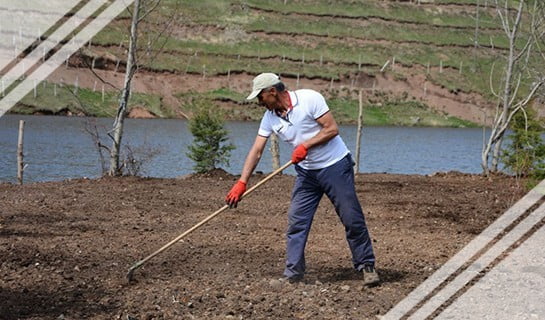
Suppose you are working on your plot, hand weeding or hilling plants. Your gardening tool may be a hoe, spade, mattock, or cultivator depending on the region. You begin cultivating the soil, taking a posture usually slightly bent, and maintain it until the work is finished or you take a break. During this time, your arm muscles are active, while your legs contribute minimally. The pelvic area and spine remain almost immobile, and certain groups of muscles surrounding them—including muscles near the prostate—stay tense without relaxation. These muscles experience negative effects from prolonged tension, mild oxygen deprivation, and restricted blood flow, and gain little benefit from such repetitive movements.
If you need to cultivate a large area in one session, problems may arise not only with the prostate but also with the lower back. Using a rake slightly increases overall activity, but partial restriction of movement is still unavoidable. To avoid strain, integrate safe physiotherapy for BPH into your routine, including stretching and gentle pelvic floor exercises.
Try to break tasks into short intervals of ten to fifteen minutes. During these periods, focus on movement quality, even if some movements are extra, and pay attention to breathing. During breaks, stretch tense areas, particularly the lower back, pelvis, and hip muscles. Suitable movements include torso rotations, bending, and twisting. If performing multiple tasks, alternate them in similar intervals with pauses. Do not hesitate to walk intentionally between work zones; it may not be the most time-efficient, but it is far more beneficial. For example, alternate work on opposite sides of your plot to reduce monotony and improve blood circulation. This approach enhances prostate health during manual labor and strengthens the pelvic muscles over time.
Consciously inducing more muscle activity and relaxation in this way, combined with reading and understanding related articles on this website, can maximize benefits. First-time visitors are encouraged to explore the List of Articles to gain a deeper understanding of safe physical activity, pelvic floor health, and effective strategies for managing BPH in daily life.
Overheating and Hypothermia
Remember that in hot weather you need to protect yourself from overheating and avoid exposing any part of your body to direct sunlight. In cooler transitional seasons, you should prevent your body from becoming chilled. I am confident that on your personal plot of land, you will never come into contact with mineral fertilizers. You should not even consider using inorganic compounds for your own purposes. Take the time to improve or adjust your gardening tools to suit your needs, such as sharpening them properly, lengthening or shortening them, widening or narrowing them, if you feel the need. In general, apply rationalization in every aspect of your work, and, of course, avoid any kind of injury.
From this, we can draw a conclusion. Work that is only partially active, but mostly monotonous or routine, will provide no benefit for benign prostatic hyperplasia. On the contrary, it may even lead to complications and the appearance of painful symptoms, since the muscle contractions are largely ineffective. Physical labor, especially if prolonged, is by no means a substitute for therapeutic exercise. Some muscles may go into spasm during such work. Proper breathing is rarely applied – in fact, you are unlikely to even think about it during the process. And if your mind is focused on completing the task rather than on improving your health, there will be no benefit.
On Side Harm
One final point. In addressing this question, I confidently assume that you are not causing yourself harm in other ways. I will give an example. Once, I received an email, roughly as follows (the original has not been preserved):
“Dear website author, I am writing with a strong desire to overcome benign prostatic hyperplasia, which has caused me a great deal of trouble recently. I read your method, and it gave me not just hope, but faith. I am a very energetic and active person, not too old, and I enjoy working productively. My main hobby is working on my garden plot. I do not smoke, so I have almost no bad habits. The only thing I allow myself is to drink, every day before dinner, exactly one hundred grams of strong homemade vodka, no more, no less, and I have done this consistently for several years. I am interested in your eighth topic as soon as possible, because the gardening season is approaching, and I want to start it healthy, without benign prostatic hyperplasia.”
My response to the sender was straightforward. Any attempts at improving health with a diagnosis of benign prostatic hyperplasia should only be undertaken after completely giving up harmful habits, especially alcohol. With benign prostatic hyperplasia, wine and other alcoholic beverages are strictly contraindicated. Naturally, the correspondence ended immediately, because it is not easy to give up even such a seemingly minor addiction, which provides pleasure. I did not send any hidden materials to the person and did not inquire about their further efforts.
I consider my response to your question to be complete and practical for any interested visitor to this website.
Respectfully, Gennadiy Plotyan, blog on symptoms, diagnostic nuances, and treatment of benign prostatic hyperplasia.
The topic on nutrition with benign prostatic hyperplasia is here: Українській, Français, English, Deutsch, العربية, Italiano, Türkçe, Español, Język Polski, Português, Русском.
The topic on the role of proper physical activity is here: Українській, Français, English, Deutsch, العربية, Italiano, Türkçe, Español, Język Polski, Português, Русском.
Homepage of the site is here: Life without BPH.