Treatment of Benign Prostatic Hyperplasia with Herbs and Dietary Supplements
Content updated in 2025–2026.
Important Advice from the Author
If possible, explore the site’s materials on a desktop computer, laptop, or all-in-one PC. This will make it much easier to view the site structure, navigate between sections, and fully absorb the content. It is also possible to use a smartphone, but due to the smaller screen size, some elements and navigation may be less clear. Information on prostate issues is presented here in a large number of articles, and each article contains only practical benefit — without unnecessary pages or intrusive advertising.
Reality and Myths about Prostate Healing
Conditions for Restoring Prostate Functions and Their Likelihood When Using Herbs, Decoctions, and Infusions
For the prostate to restore its natural function as fully as possible, and for benign hyperplasia to diminish, the body must meet certain conditions within the framework of natural prostate treatment and long-term health support. There are three main conditions. I will list them below.
- First, increase the elasticity of vascular tissue, which is essential for prostate function recovery.
- Second, stimulate proper blood circulation. If the first and second factors are addressed, this will eventually improve the health of the whole body, not just the pelvic area, including the prostate gland.
- Third, stabilize the endocrine system, which plays a key role in non-surgical BPH management.
These three factors are closely connected. Ignoring even one of them during treatment may prevent any positive results. I suggest observing carefully whether any improvement occurs at all, and how noticeable it is for each criterion when using folk remedies for benign prostatic hyperplasia (BPH) and other forms of herbal remedies for prostate support. This approach allows you to form a reasoned, independent opinion on the role of these remedies. Most of them are plant-based—usually herbs—or products derived from plants that are widely used in traditional prostate care.
Reasoned Analysis
- The first component is the elasticity of vascular tissue. People who monitor themselves regularly know that body weight usually changes only slightly during the day. Measure your weight before going to bed and immediately after waking. If you urinate overnight, subtract the volume of urine. The net weight loss overnight can be 0.5–1 kilogram or more. This mainly reflects fluid loss through the respiratory tract. Dehydration is one of the causes of spasms, which are the opposite of elasticity. Throughout the day, our bodies naturally replenish water losses. The simplest and most effective way to maintain water balance during rest is to consume a measured amount of vegetable oil—sunflower, olive, pumpkin, or flaxseed—commonly recommended in natural prostate treatment practices. You have probably seen many claims about oils. These claims are often general, and while hard to dispute, they rarely provide clear conclusions. They may mention vitamins, minerals, fatty acids that lower “bad” cholesterol, and metabolic benefits. While all of this is helpful, it does not address the key mechanism for treating the prostate. The viscous components of oil coat cell membranes and help preserve water balance. In this way, the elasticity of cells—and therefore tissues—can be improved. Daily intake of 30 grams (about one and a half tablespoons) of high-quality oil on an empty stomach—preferably in the evening—and, for better absorption and to avoid digestive discomfort, followed ten minutes later by very warm tea with honey, can significantly reduce overnight fluid loss in a short time. This is a positive step, though not a dramatic change. There is no need to buy expensive oil. Choose what fits your budget; the key is that it is genuine and unprocessed (cold-pressed). Contraindications are few, such as gallstones or cholecystitis. This simple practice supports prostate health over time and complements herbal prostate therapy.
- The second component is circulation. Most advisers overlook this aspect, yet dozens of herbal recipes aim to improve blood flow, including willowherb, hazel, fir and aspen parts, echinacea, and other complex herbal blends used in herbal remedies for prostate circulation. This is a concern because many recommendations ignore an important rule: herbal treatments can only safely improve circulation if there are no side effects. Patients with BPH often have cardiovascular problems. Herbal decoctions—especially alcohol-based infusions—can improve circulation but may also trigger spasms or raise blood pressure, causing harm. Such remedies should only be used by those without hypertension and with constant self-monitoring of blood pressure. Anything that relaxes the body has a drawback: its effects can fade quickly and may stop entirely. Proper circulation support is crucial for male reproductive wellness and sustained prostate function recovery.
- The third component is stabilization of the endocrine system. I have not seen any herbs that reliably regulate dihydrotestosterone levels directly in the prostate, and I believe it is better not to look for them. Anything that might affect these levels even slightly likely comes with dangerous side effects. Focus should instead be on lifestyle and nutrition that maintain hormonal balance and support overall prostate function as part of comprehensive prostate health management.
The Conclusion Will Be Negative
I aim to be objective. Here is the conclusion: claims that herbs can reliably cure BPH are greatly exaggerated. Such treatments should be considered only supplementary, with minimal impact. The same applies to herbs for chronic prostatitis. Most patients who have tested these remedies personally would agree.
Anyone claiming to have cured the prostate solely with anti-inflammatory or pain-relieving herbs is deceiving themselves and misleading others. Temporary or unstable relief is not a full recovery. Even if folk remedies produce no results, that is only part of the concern. The main priority is to avoid side effects or worsening BPH symptoms. Recipes are often misused. For example, it is alarming when patients ask whether celandine can treat the prostate. Nature cannot be fooled, and disease cannot be overcome by inaction. Treating the prostate with folk remedies is highly conditional. Daily physical activity, proper breathing, and a reasonably restricted diet are necessary. Only under these conditions can results be successful.
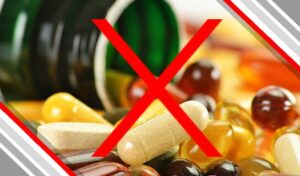
Treating the Prostate with Dietary Supplements
Some people explore how to treat BPH with folk remedies or address chronic prostatitis, while others turn to dietary supplements. I will comment on so-called dietary supplements.
No matter how they are promoted, these products are simply combinations of substances designed to replenish the body with vitamins in case of deficiency. They have never had—and will never have—any other properties. Attempting to treat the prostate with them is pointless.
In society, we often need to prove that something harmful is unsafe and that something worthless is indeed worthless—not a miracle cure. Over time, some opportunists have begun to see dietary supplements as a way to make money. Corruption allows fraudsters to organize elaborate sales schemes, presenting them as miraculous cures. Officials may cover up such fraud. The most cynical create companies with convincing names and control the business from production to sale.
The pills themselves are useless. But everything around them—the labels, packaging, and boxes—is designed to look high-quality. Labels may list countries with strong reputations, such as Germany, France, Japan, the United Kingdom, the USA, or China. This is deception, but it influences the buyer’s perception. The product’s “face” is expensive to create. A catchy or mysterious name is always invented, for example: “The Secret of Tibet,” “The Power of Ten Dragons,” or “Men’s Super Health.”
Those involved follow modern sales strategies and promote the product aggressively. Websites are visually striking, and television coverage may include short programs about the product. The cost of these services is included in the price. The capsule itself, or liquid form, has no proven medicinal effect. Claims about its mechanism or scientific development are false. Most likely, the pills are made of neutral ingredients to avoid harm.
I randomly visited the first advertising site I found, read about a dietary supplement for BPH, and summarized it. It claimed to cleanse vessels (essentially a laxative), correct metabolism (taking a pill with water is counted as metabolic adjustment), and restore disrupted connections (vitamins, which are more abundant in fruits and vegetables). Step by step, the description is technically correct—but the main claim, that it treats BPH, is false. For consumers, everything is presented as a “multi-carat diamond in a platinum setting.”
On Methods of Selling Dietary Supplements
The principle is to target those who most desire the product. I have seen three main methods, though new ideas may emerge.
-
First.
Offer a price that causes minimal dissatisfaction after useless use. The price is set to be tolerable. Trading may continue until the product is discredited. Then the name is changed or the sale location is closed.
-
Second.
Sell in a way that prevents complaints. Transactions are online or by phone. The goal is to impress clients with a façade of professionalism, often inducing temporary psychological compliance. Prices may reach hundreds of dollars. After purchase, contacting the seller is nearly impossible and unnecessary. Some organizations prosper using this method across countries.
If a seller claims that effects are due to anti-proliferative or anti-androgenic effects, serenoa steroid components, aromatase inhibition, or blocking estrogen receptors, and even misspells complex words, do not panic. Stay calm, breathe deeply, pause, and decisively end communication with the charlatan.
-
Third.
Work with a client as long as they can or want to pay. The height of cynicism is selling supplements that “treat” in stages, without informing the buyer immediately. The client may pay $1,000 or more. If no improvement occurs, the seller claims multiple courses are required and offers additional deception at the same price. Everyone wants to be healthy, even those with limited income. For example, an elderly man with a $150 pension once took a bank loan and spent $1,500—a tenfold increase over his monthly income—on a dubious product. He realized later that the money was gone without benefit. He was also subjected to moral pressure: “Everything was wasted because you did not buy the next course!” Such schemes are designed to extract maximum money, especially from the defenseless.
I am confident that after reviewing all the BPH information on this site and studying the “Without Benign Prostatic Hyperplasia” method itself, you will not fall into such traps—or even seek them out.
Respectfully, Gennadiy Plotyan , Ukraine.
If desired, you can read this section in: Français, Español, العربية, Türkçe, Deutsch, Italiano, Português, Język Polski, Українській, Русском.