Getting Rid of Benign Prostatic Hyperplasia: The Importance of Physical Activity and Gymnastics

Important Advice from the Author
If possible, explore the site’s materials on a desktop computer, laptop, or all-in-one PC. This will make it much easier to view the site structure, navigate between sections, and fully absorb the content. It is also possible to use a smartphone, but due to the smaller screen size, some elements and navigation may be less clear. Information on prostate issues is presented here in a large number of articles, and each article contains only practical benefit — without unnecessary pages or intrusive advertising.
The Role of Physical Activity in Prostate Health
Why Reasoned Movement Is Important
It hardly needs proving that physical exercise is generally beneficial. However, few people realize that it can become a powerful health-promoting process for men with symptoms of prostate disorders. Over years of practice, I have learned a basic rule: everything should be done according to proper guidelines. Of course, the principles must first be understood. It is usually better to learn from someone else’s teaching than through personal trial-and-error experience, which I know from my own mistakes.
Here, I will explain how moments that promote prostate healing arise during movement. More precisely, I will offer a way to understand movement itself. I will provide some general advice applicable to everyone and justify the necessary points. The main information, however, is contained in the methodology. But read on—there is nothing unnecessary ahead.
All health begins where harmless, controlled improvement of blood circulation occurs. This is the essence of therapeutic physical exercise.
Everything Is Accessible and Simple
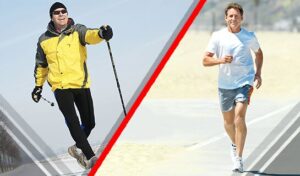
There is no need to invent anything. There is gymnastics (exercises for BPH, or completely similar physical exercises for the treatment of chronic prostatitis), as well as walking, running, and swimming. That is all. Proper application of these types of activity is sufficient to begin the path to health. Ultimately, when combined with a restrictive diet, it can help eliminate benign prostatic hyperplasia, many other prostate conditions, and more. I can confidently call this method the most reliable, sensible, and truly folk-based approach to treating BPH.
Swimming, of course, is optional. I understand that it is not accessible to everyone, but without it, the path to results may be longer. Large financial costs are not required. If special gear is not available, one can choose very affordable options. The main requirement is comfort. Finding places to exercise with reasonably fresh air is still manageable. Access to water can be more challenging. Clean bodies of water are rare, and not all temperatures are suitable for swimming. Visiting a swimming pool is optimal. Even if it is paid, this should not exclude swimming from your exercise routine.
The Advantage of Variety in Exercise
The strongest therapeutic effect comes from alternating different types of physical activity. For example, one morning you may go swimming, and the next day at the same time, you go for a run or a walk. Such variety rarely causes psychological strain; mind and body do not demand a break. It also engages different muscle groups, which benefits both the speed of recovery and the quality of blood circulation. In short, it helps achieve the results you seek through physical exercise.
The duration of workouts for treating benign prostatic hyperplasia and chronic prostatitis—whether through physical exercises, similar gymnastics, or indeed any therapeutic physical exercise for the prostate—should be reasonably moderate. The essence of your activity is healing, not building muscle mass. Excessive strain can lead to system malfunctions and tissue spasms, which is counterproductive.
In my first months, the total daily duration of sessions was two to two and a half hours. I took a day off according to desire once a week, or even less frequently. I consider this a small price for independence from questionable pharmaceutical medicine and a remarkable statement to those who call BPH an incurable condition. Later, as my condition improved, I learned when to allow myself relaxation and when to exert effort, making the schedule less rigid.
Intensity and Well-Being: Some Self-Tested Rules
The phrase “through hardships to the stars” does not apply here. Any training—whether physical exercises, running, walking, or simple exercises to strengthen the prostate—should never lead to fatigue, malaise, or further discomfort. If such sensations occur, the first step is to analyze how movement is combined with breathing. If unhealthy sensations arise consistently from any muscular activity, it is a serious signal to pay attention to your health and undergo a comprehensive medical examination.
The Importance of Proper Breathing
Do not hesitate to breathe properly during movement.
Gymnastics and its breathing techniques are quite specific. I have explained this thoroughly in the methodology, so I will not cover it in detail here. During brisk running, deep inhalations and exhalations should occur without holding the air in the lungs. During swimming, after a full inhalation, a comfortable pause is extremely beneficial and unavoidable if following correct technique. Initially, exhaling more in water may feel unusual, but the responsible muscles adapt quickly. Long breath-holding is not possible. The exhalation pause should be short and effortless.
During walking, it is usually possible to breathe deeply with pauses. After inhalation, the pause can be longer; after exhalation, it should last only a second, marking the fact of full exhalation. From experience, many people overemphasize breathing during pauses after exhalation. This is a serious mistake. Not everything done excessively is wise. In general, as the saying goes, “there is no need to break your forehead to pray.”
Do Not Rush, It Will Be Beneficial
It is never too late to learn or to treat yourself. But treatment through movement is specific and requires a certain physiological state. If, for the past 25–30 years, you have only remembered exercise when watching sports programs and have developed unhealthy habits that led to your problems, you must first eliminate these habits. Then gradually tone your muscles and cardiovascular system. Your vessels and heart must respond positively to movement. This preparation is not long, trust me.
Warm-Up Is Mandatory!
Engage in any activity only after a proper warm-up. I strongly recommend dedicating half of the session time to it. It may be acceptable to injure an unprepared leg muscle out of ignorance, but the heart is also a muscle. The consequences of repeatedly starting incorrectly can be unpredictable.
Swimming, running, or walking should be done not only on an empty stomach but also with an empty bladder.
Faster – Slower
Now about a rule that I did not invent (it is probably thousands of years old) but have applied with great benefit. It involves regulating pace. Scientifically, it is the alternation of aerobic and anaerobic loads. Simply put, it is changing the speed of movement. A slow pace is followed by a brief fast pace, and the cycle repeats. I call it “faster – slower.”
During such exercises, increased muscle contractions trigger a sharp rise in oxygen consumption. Its powerful release into the bloodstream ensures maximum blood circulation through the vascular system. From there, the benefits become multifaceted. This includes vessel peristalsis, improved metabolism with increased oxidative reactions, during which vascular tissue is cleansed of obstructions (such as cholesterol plaques). Maintaining maximum activity for a long time is impossible and unsafe. Therefore, the pace should be slowed afterward. With experience, I became confident that the “slower” phase is at least as important as the “faster” phase. If during the slow phase one also learns to fully relax (reducing skeletal muscle tone), the benefits of such procedures are maximized.
Exercise Options
I will provide several examples of walking and running sessions to clarify. You should decide which to use based on your physical condition.
- Calm walking alternates with fast walking. The length of accelerations after warming up is short, up to 100 meters (depending on your preparation), followed by rest and full breathing recovery during calm walking. Repeat. Distance: 3–3.5 kilometers; later, it can be slightly longer.
- Walking at a normal pace alternates with jogging (or faster), then returning to walking with simultaneous rest until breathing is fully recovered, followed by fast walking, repeating the process. The duration of accelerations should be 50–100 meters (depending on load and preparation). Distance remains the same. If you are not on a track (which is better) and observers are present, it may look unusual. I advise raising one arm, waving it, ignoring any embarrassment, and starting the session. I consider this exercise more effective than the first.
- For the most prepared: running in which accelerations alternate with light jogging until breathing is fully recovered. Distance: 2–3.5 kilometers. It is beneficial to perform 4–5 accelerations in the second half of the distance (after warm-up).
For all types of training, I recommend finishing each distance with a maximum acceleration. Monotonous running is acceptable, but its effectiveness is limited. The first two exercises are not interchangeable with the third. If you can run, you should also walk on the same day to complete a daily norm of 6–7 kilometers. If you only walk, it is better to walk three kilometers twice a day than six or seven kilometers once. The main principle: after acceleration, there should be quality relaxation, and vice versa.
Self-Monitoring
To avoid problems, practice self-monitoring initially, until your measurements align with your sensations and become ingrained in your awareness. Check your pulse. A simple rule: 220 minus your age. For example, if you are 50, the upper limit of permissible pulse is 170 beats per minute. If your heart rate reaches 70–75 percent of the maximum after acceleration (for example, 120 beats), it is very beneficial; I do not advise exceeding this. Full recovery should occur within 25–35 minutes at most, depending on the type and duration of exercise.
After sessions, measure body temperature. This indicator of thermal state is complex and, in my opinion, not fully studied. It should decrease—significantly, by about one to one and a half degrees. In my experience, this decrease reflects the body’s oxygen saturation and the quality of circulation.
Everything mentioned above is feasible at both mature and older ages. Do not use age or physical weakness as an excuse. Complaining is not weakness—it is laziness. Any load can be adjusted. Once you start, real therapeutic physical exercise is not one of the obscure methods for treating BPH or chronic prostatitis while immobile, nor is it a placebo effect. The results are substantial. With reasoned movement, blood will never slow, and vessels will not constrict. That is impossible—it is like rivers flowing backward. The key is desire.
Exercises That Are Undesirable for Prostate Health
Harmful physical activity exists and, unfortunately, is promoted among youth, but it is absolutely unsuitable for health improvement. When working with heavy weights (kettlebells, heavy dumbbells, barbells, or strength machines), muscle contraction gains high tone. Small and large vessels supplying the muscles become overfilled with blood. Increased circulation promotes tissue growth. Over time, a paradox arises: enlarged tissues begin to compress the vessels that supplied their growth sources. This unhealthy compression later causes destructive spasms. Hypertension may appear first, which over time is highly likely to lead to serious problems, including with the prostate. If steroids were used, the effects worsen much faster. I have met several young people, even as young as 22, who sacrificed their health for bodybuilding. Their reasoning was surprising. Often, I had to spend a long time explaining the harm of heavy weight training. Their typical question was: “Why did these problems happen to me?” I leave that unanswered.
In mature and older age, kettlebells and even dumbbells are unnecessary. Avoid pull-up bars and parallel bars if you used them before. Also, convincing yourself that you cannot lift anything at all is incorrect. Any reasonable short-term weight can be moved, for example, for household tasks or helping family.
A few misconceptions: meaningless exercises such as “walking on the buttocks,” squats, or cycling do not significantly affect prostate healing and are not compatible with treatment. Not only lifting weights, but also certain other types of physical activity can be counterproductive. Explanations and recommendations for beneficial exercises for the prostate are provided on other pages of this resource.
Respectfully, the author of the site on the symptoms, diagnosis, and treatment of BPH, Plotyan Gennadiy.
Link to the prostate treatment methodology: Русский, Українська, English, Türkçe, العربية, Deutsch, Français, Italiano, Español, Português, Język Polski.
If convenient, explore this topic in other languages: Українській, Français, Deutsch, العربية, Italiano, Türkçe, Español, Język Polski, Português, Русском.